
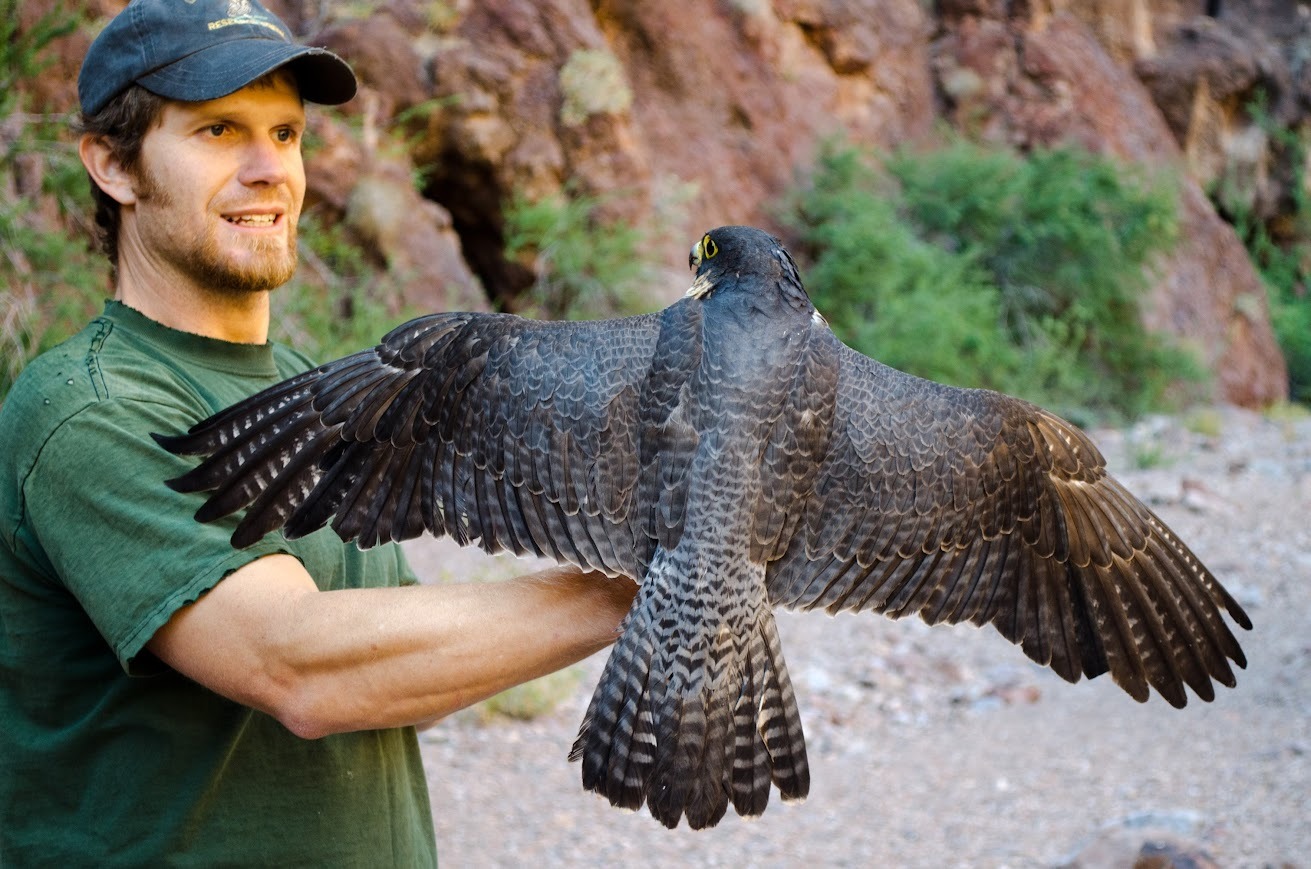
Current work spans multiple long-term sites monitoring golden eagles, peregrine falcons, prairie falcons, and ferruginous hawks.
Collaborators include University of Nevada, Reno and Boise State University
Active Research
Breeding Success, Prey Analysis, Mercury Levels
Methods include banding, nest monitoring, telemetry, stable isotope anaylsis. Geographic scope includes extensive coverage throughout southern, central, eastern and western Nevada.
Recent publications
Science · May 2026
Journal of Raptor Research · Mar 2026
Journal of Raptor Research · Nov 2025
Interacting effects of human presence and landscape modification on birds and mammals
Response to Early Nest Entry and Camera Installation by Arctic-Breeding Golden Eagles
Estimating Survival and Population Trajectories of Golden Eagles in Nevada
Cameras have been used to study aspects of Golden Eagle breeding biology for decades, yet little research exists to decide on an acceptable nestling age when considering the installation of nest cameras. One recommendation cautions against entering Golden Eagle nests with young <21 d old because of the potential for nest abandonment and limited nestling thermoregulatory capacity.
Sustainable human–wildlife coexistence requires a mechanistic understanding of the many ways that humans affect animals. However, progress is hampered by the lack of accessible data measuring the dynamic presence of people. Here, we leverage mobile-device data to disentangle how human presence and landscape modification differentially influence the use of geographic and environmental space for 37 mammal and bird species across the United States.
Golden Eagle populations in western North America have recently been reported as stable. Vital rates, however, can vary geographically and across life stages to the extent that local population sources and sinks may form. The little-studied population in Nevada is of particular interest in this regard based on its large contribution to the species' breeding population in the western USA.